Fencing for Working Farms
Agricultural Fencing in the Chicago, Illinois Area
Durable agricultural fencing for working farms, ranches, pastures, fields, and production properties—planned around livestock, crops, equipment access, and daily farm operations.
Livestock Control
•
Crop Protection
•
Farm Access
•
Chicago Area Service
Built for Agricultural Use
Fencing That Supports the Way Your Farm Operates
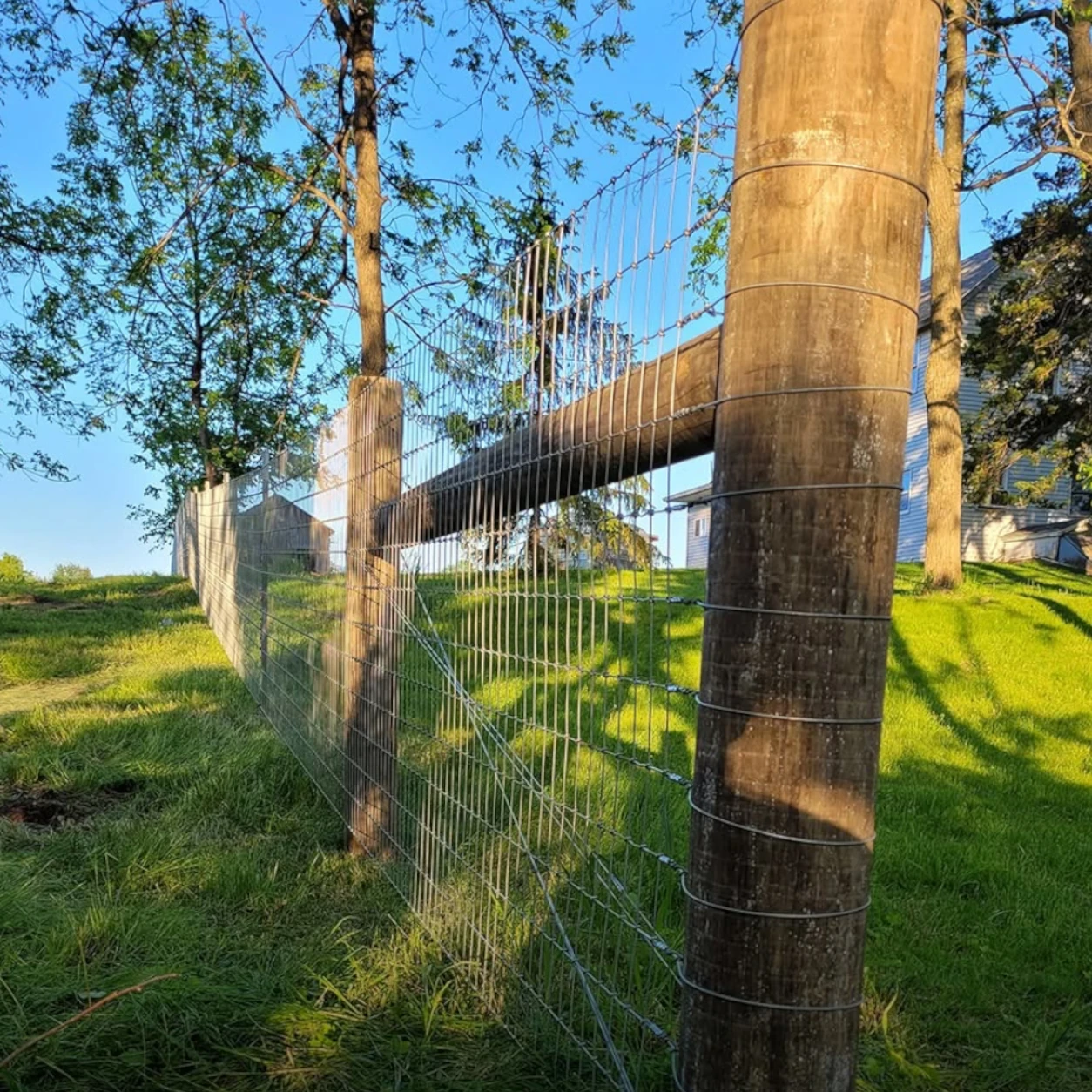
Agricultural fencing is part of the farm’s working system. It must contain livestock, protect crops and production areas, divide pastures and fields, and allow people and equipment to move efficiently through the property.
Farmland Fencing LLC plans each system around the operation itself. We consider animal type, pressure points, terrain, soil, fence-line length, gate locations, equipment access, maintenance expectations, and how each area of the farm is used throughout the year. We provide new fence installation, fencing repair, and fence replacement when an existing system no longer performs as needed.
The objective is a durable farm fence that improves control and access without interfering with daily agricultural work.
Fence Options
Agricultural Fence Options for Working Properties
The right system depends on the animals or areas being protected, the length and layout of the fence, pressure points, terrain, operating needs, and long-term maintenance goals.
High-Tensile Fencing
A practical option for long fence runs, pasture divisions, and livestock containment. Proper post depth, bracing, spacing, and wire tension are essential for dependable performance.
Woven-Wire & Field Fencing
A continuous barrier for livestock, fields, crop areas, and smaller animals. Wire height, opening size, post spacing, and reinforcement are selected for the intended use.
Barbed-Wire & Electric Fencing
Barbed wire can serve suitable livestock and boundary applications, while electric fencing can add control or flexible pasture management where appropriate.
Designed Around the Operation
Reliable Agricultural Fencing Starts With the Right Design
Farm fences face daily pressure from animals, equipment, weather, and changing ground conditions. Post spacing, corners, braces, tension, and gate placement must work together so the system remains dependable.
✓ Livestock type, behavior, pressure points, and containment needs
✓ Fields, pastures, crops, paddocks, and protected production areas
✓ Terrain, soil, drainage, corners, grade changes, and fence length
✓ Tractors, trailers, vehicles, mowing, and maintenance access
✓ Agricultural gate width, placement, swing, and livestock movement
✓ Rotational grazing, future expansion, repairs, and maintenance goals
Our Process
From Farm Review to Installation
01. Review the Operation
We discuss the property, livestock, fields or crops, fence length, current problem areas, gate needs, equipment access, existing fencing, and future plans.
02. Design the System
Materials, fence lines, post depth, spacing, corners, bracing, wire tension, and gate locations are selected to fit the operation and terrain.
03. Install for Daily Use
The fence and gates are installed with attention to alignment, strength, controlled access, livestock movement, and a clean result built for demanding farm use.
Agricultural Fencing FAQs
Questions About Agricultural Fencing
What type of agricultural fence is best for my farm?
The best system depends on the livestock, crops or areas being protected, fence length, terrain, pressure points, access needs, and maintenance expectations. High-tensile, woven-wire, field, barbed-wire, electric, or combination systems may be appropriate after the operation is reviewed.
How is the cost of agricultural fencing determined?
Cost is affected by fence length, material and wire type, post spacing, corners and braces, terrain, soil, clearing, gate quantity and width, access to the fence line, and whether existing fencing must be repaired, removed, or replaced. A farm-specific estimate is more reliable than a general per-foot figure.
Can one farm use more than one type of fencing?
Yes. A farm may need different systems for perimeter boundaries, livestock pastures, crop areas, paddocks, lanes, and temporary divisions. Combining fence types can provide better control and efficiency than using one material everywhere.
Can agricultural gates be included with the fence installation?
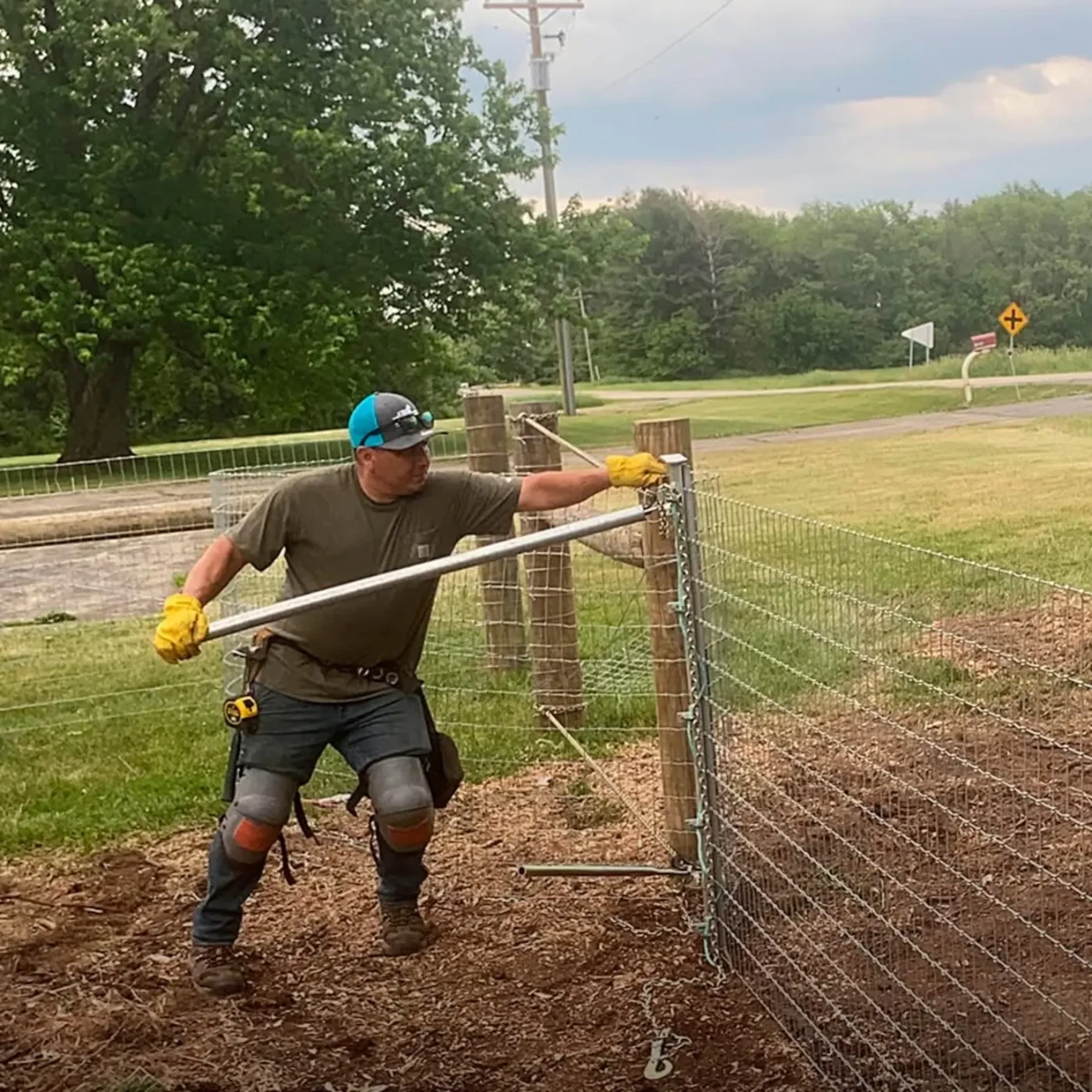
Yes. Agricultural and farm gates can be planned for tractors, trailers, livestock movement, deliveries, mowing equipment, and daily access. Gate width, placement, swing direction, and surrounding bracing are considered as part of the fence design.
How much does agricultural fence installation cost?
Agricultural fencing costs depend on the total fence length, selected materials, terrain, soil conditions, fence height, post spacing, bracing requirements, gates, corners, and site access. A straightforward field boundary may require a different investment than a livestock enclosure with multiple divisions and equipment gates. Farmland Fencing reviews the property and intended use before recommending a system and preparing an estimate.
Do you install agricultural gates and equipment access points?
Yes. Gates and access points can be incorporated into the agricultural fencing plan. Their width, location, and construction should accommodate livestock movement, tractors, trailers, maintenance vehicles, and everyday farm operations. Planning them with the fence helps avoid restricted access, difficult turns, and unnecessary alterations later. Gate requirements should be discussed during the initial property review.
Explore Related Services
Related Fencing Solutions for Working Farms
Livestock Fencing
Contain cattle and other farm animals with a system designed for their behavior and pressure.
Pasture Fencing
Create dependable pasture boundaries and divisions for grazing and livestock management.
Agricultural Gate Installation
Add properly sized and braced access points for equipment, vehicles, and livestock movement.
Start Planning Your Fence
Let’s Build the Right Fence for Your Farm
Tell us about your farm, livestock or crops, fence length, existing conditions, gates, and project location. We’ll help you determine the most practical agricultural fencing solution.
Professional agricultural and farm fencing throughout the Chicago, Illinois area.