Continuous Panel Installation & Repair
Continuous Panel Fencing in the Chicago, Illinois Area
Heavy-duty continuous panel fencing for cattle corrals, holding pens, sorting lanes, feeding areas, gates, repairs, replacement, and new installation.
High-Strength Livestock Containment
•
Corrals & Handling Areas
•
Low-Maintenance Steel Panels
•
Chicago Area Service
Welded Steel Systems for Working Livestock Areas
Continuous Panel Fencing Built for Daily Livestock Pressure
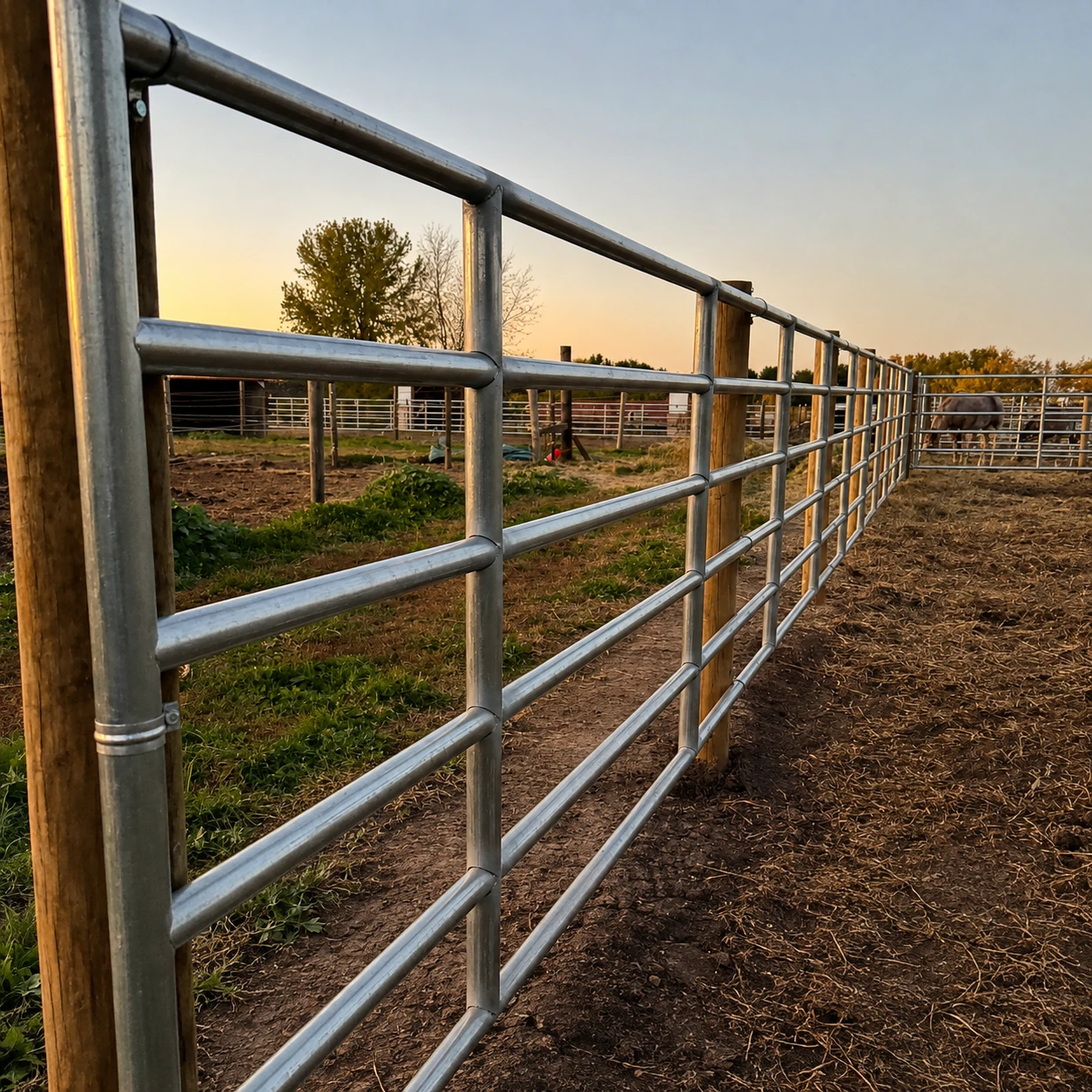
Continuous panel fencing creates a strong, highly visible steel barrier for cattle facilities, corrals, holding pens, sorting areas, feeding zones, livestock lanes, and other high-traffic working spaces. Welded horizontal rails form continuous fence runs that can withstand more pressure and repeated animal contact than many lighter fencing systems.
Farmland Fencing installs and repairs continuous panel fencing throughout the Chicago area. Each system is planned around the livestock, enclosure purpose, animal pressure, panel height and rail spacing, posts, attachment points, gates, corners, terrain, drainage, equipment access, and connections to adjoining fencing.
Dependable continuous panel fencing requires properly spaced structural posts, secure welded or clamped connections, consistent panel alignment, reinforced gates and corners, and a layout designed around livestock movement.
Continuous Panel Applications
Use Continuous Panels Where Strength Matters Most
Continuous panels are especially useful where livestock gather, turn, feed, load, or place repeated pressure on a fence. The right layout depends on the animal type, group size, movement pattern, pen purpose, rail spacing, ground conditions, gate locations, maintenance needs, and budget.
Cattle Corrals & Holding Pens
Continuous panels provide a strong, highly visible enclosure for cattle corrals, holding pens, receiving areas, crowding spaces, and other locations exposed to concentrated animal pressure.
Sorting Lanes & Feeding Areas
Continuous steel panels can define livestock lanes, sorting areas, feeding zones, loading approaches, and other working spaces where dependable boundaries support controlled animal movement.
Gates & Fence Transitions
Gates and transitions should connect continuous panels securely to adjoining corrals, pasture fencing, buildings, lanes, and other enclosure systems without creating weak points or vulnerable gaps.
Planning the Panel System
Coordinate Panels, Posts, Gates, Movement, and Ground Conditions
Thoughtful fence design determines where continuous panels provide the greatest value, how livestock will move through each enclosure, and how posts, gates, corners, adjoining fences, and equipment routes should be coordinated.
Planning the entire working area before installation helps prevent weak transitions, poorly positioned gates, vulnerable corners, obstructed equipment routes, inconsistent panel heights, and spaces where livestock can crowd or escape.
✓ Livestock species, animal size, temperament, herd pressure, stocking density, and enclosure use
✓ Corrals, holding pens, sorting lanes, alleys, crowding areas, feeding zones, loading points, and working facilities
✓ Panel height, rail count, rail spacing, steel dimensions, panel length, alignment, and ground clearance
✓ Structural posts, post spacing, post depth, concrete, welds, clamps, brackets, corners, and end connections
✓ Gates for livestock, handlers, tractors, trailers, feeding equipment, deliveries, and emergencies
✓ Terrain, drainage, slopes, soil conditions, erosion, snow, manure removal, maintenance, and equipment access
✓ Connections to existing corrals, buildings, woven-wire fencing, cattle fencing, pasture fencing, and future additions
Our Process
From Livestock Review to a Secure Continuous Panel System
01. Review the Livestock and Working Area
We review the livestock, animal pressure, enclosure purpose, existing fencing, corrals, pens, lanes, feeding areas, terrain, drainage, gates, buildings, equipment access, and future expansion plans.
02. Design the Panel and Gate Layout
Panel routes, height, rail spacing, structural posts, corners, gates, attachment methods, fence transitions, working clearances, and connections to existing enclosures are planned around livestock movement and daily operations.
03. Set Posts, Attach Panels, and Inspect
Posts, panels, corners, gates, brackets, clamps, welds, and transition components are installed with consistent alignment and secure connections. The completed system is inspected for sharp edges, vulnerable gaps, weak attachments, and other potential hazards.
Continuous Panel Fencing FAQs
Questions About Continuous Panel Fencing
What is continuous panel fencing commonly used for?
Continuous panel fencing is commonly used around cattle corrals, holding pens, sorting lanes, feeding areas, loading approaches, working facilities, and other high-pressure livestock spaces. Its strength and visibility make it especially useful where animals regularly gather or contact the fence.
How are continuous panels installed?
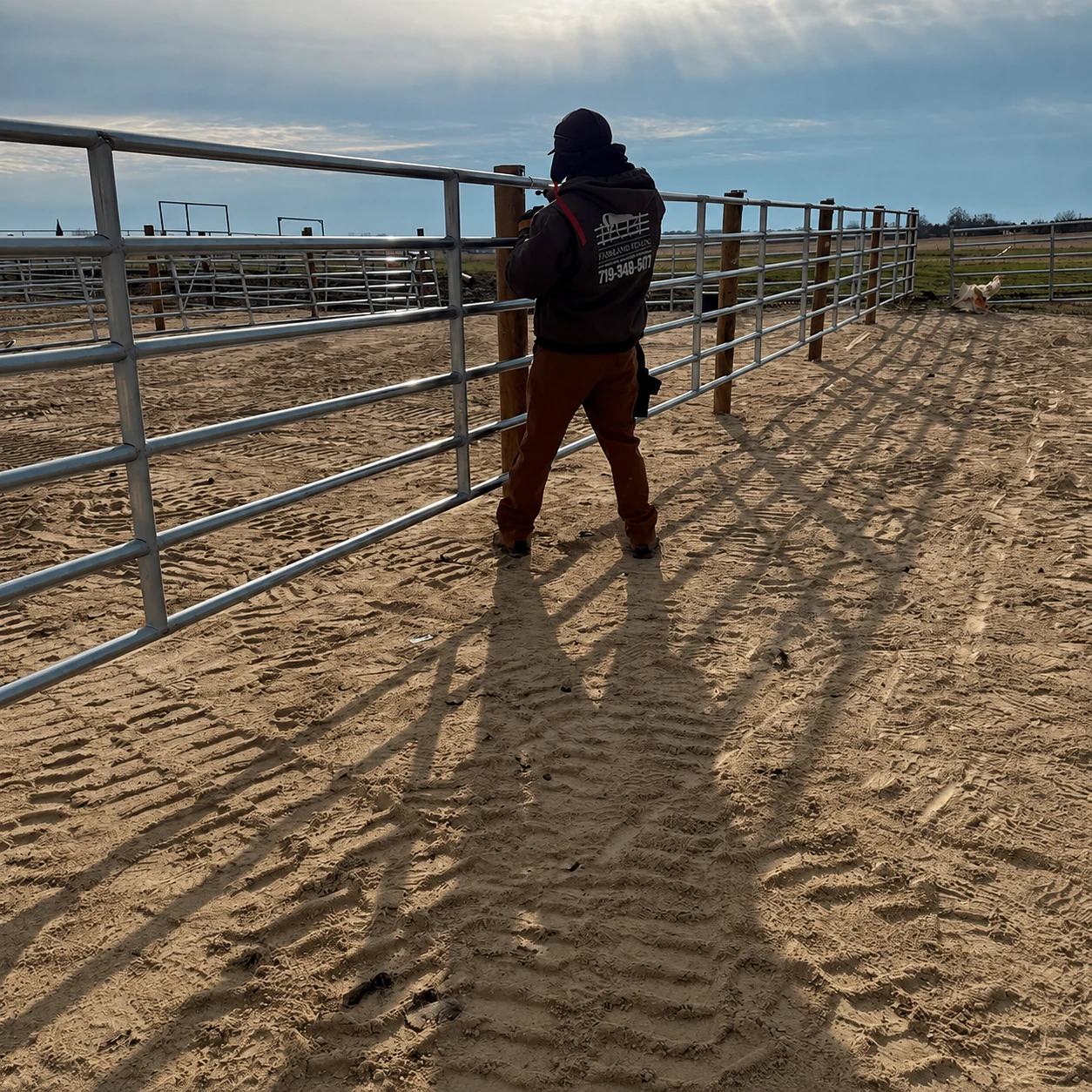
Continuous panels are attached to properly positioned structural posts using suitable welded connections, clamps, or brackets. Installation requirements depend on panel dimensions, post type, post spacing, soil conditions, animal pressure, gates, corners, ground clearance, and connections to adjoining fences or buildings.
Can continuous panels connect to gates or other fence types?
Yes. Continuous panels can connect to gates, corrals, buildings, woven-wire fencing, cattle fencing, pasture fencing, and other suitable enclosure systems. Each transition should be designed to maintain strength, alignment, proper clearance, and safe livestock containment.
Can damaged continuous panels be repaired or replaced?
Yes. Continuous panel fencing can be evaluated for bent or broken rails, failed welds, loose clamps, leaning posts, corrosion, damaged gates, sharp edges, weak corners, and unsafe transitions. Individual sections may be repaired, reinforced, replaced, extended, or reconfigured.
How much does continuous panel fencing cost?
Cost depends on the total fence length, panel height and construction, steel prices, structural posts, post spacing, corners, gates, welding or attachment requirements, terrain, soil conditions, equipment access, transitions, and removal of existing fencing. A site review is needed for an accurate estimate.
Do you install continuous panel fencing throughout the Chicago area?
Farmland Fencing installs and repairs continuous panel fencing for farms, cattle facilities, corrals, holding pens, feeding areas, and livestock operations throughout the greater Chicago area. Provide the property address, livestock type, approximate fence length, enclosure use, and gate requirements when requesting an estimate.
Explore Related Services
Related Services for Continuous Panel Fencing
Livestock Fencing
Plan complete livestock fencing for pastures, paddocks, interior divisions, perimeter lines, animal movement, equipment access, gates, repairs, and expansion.
Farm Fencing
Coordinate pasture fence, field divisions, boundaries, animal enclosures, gates, materials, repairs, and new installation across the working property.
Fencing Repair
Address bent rails, failed welds, loose attachments, leaning posts, unstable corners, damaged gates, corrosion, and equipment impact.
Start Planning Your Panel System
Let’s Build a Strong Continuous Panel System
Tell us about your livestock, corrals, holding pens, sorting areas, feeding zones, gates, existing fencing, animal pressure, equipment access, and project location. We’ll help you plan a strong continuous-panel system for dependable daily use.
Professional continuous panel fencing for cattle corrals, holding pens, sorting lanes, feeding areas, gates, repairs, replacement, and new installation throughout the Chicago, Illinois area.