Barbed Wire Fence Installation & Repair
Barbed Wire Fencing in Rockford and Northern Illinois
We install and repair barbed wire fences for farms, cattle pastures, field boundaries, and long fence runs throughout Rockford and Northern Illinois.
Long-Run Boundary Fencing
•
Cattle & Pasture Applications
•
Strong Corners & Consistent Tension
•
Rockford & Northern Illinois Service
Economical Fencing for Working Land
Barbed Wire Fencing Built for Long Runs and Real Farm Use
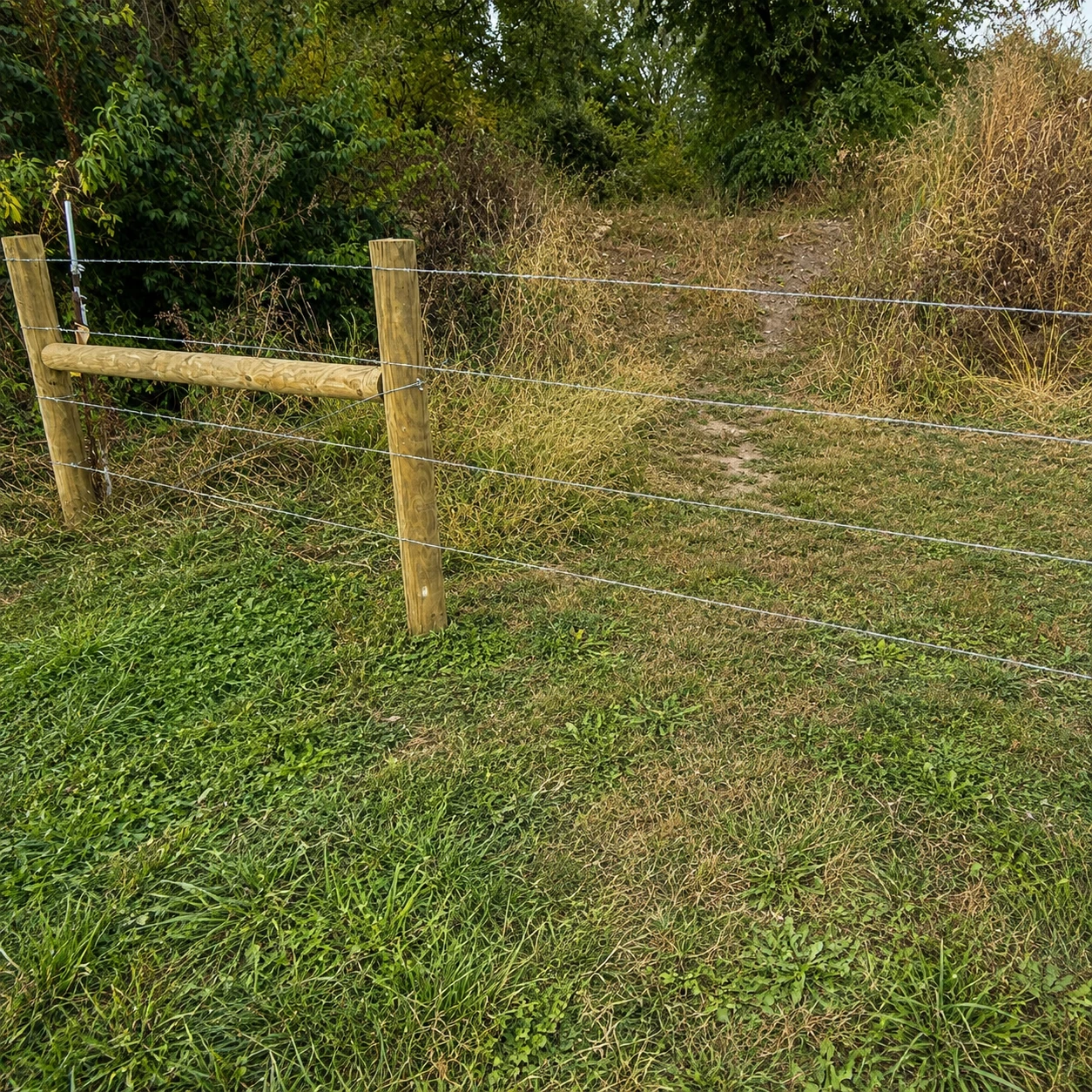
Barbed wire fencing is an economical option for long agricultural boundaries, cattle pastures, field divisions, and suitable livestock areas. As a result, its performance depends on more than the wire itself: corners, braces, posts, spacing, fastening, terrain, gates, and tension must work together as one complete system.
In addition, Farmland Fencing installs and repairs barbed wire fencing throughout Rockford, Northern Illinois, and the greater Chicago area for farms, ranches, pastures, fields, acreage, and rural-property boundaries. We plan each fence around the livestock, land, total run length, pressure points, access requirements, existing fencing, maintenance, and intended use.
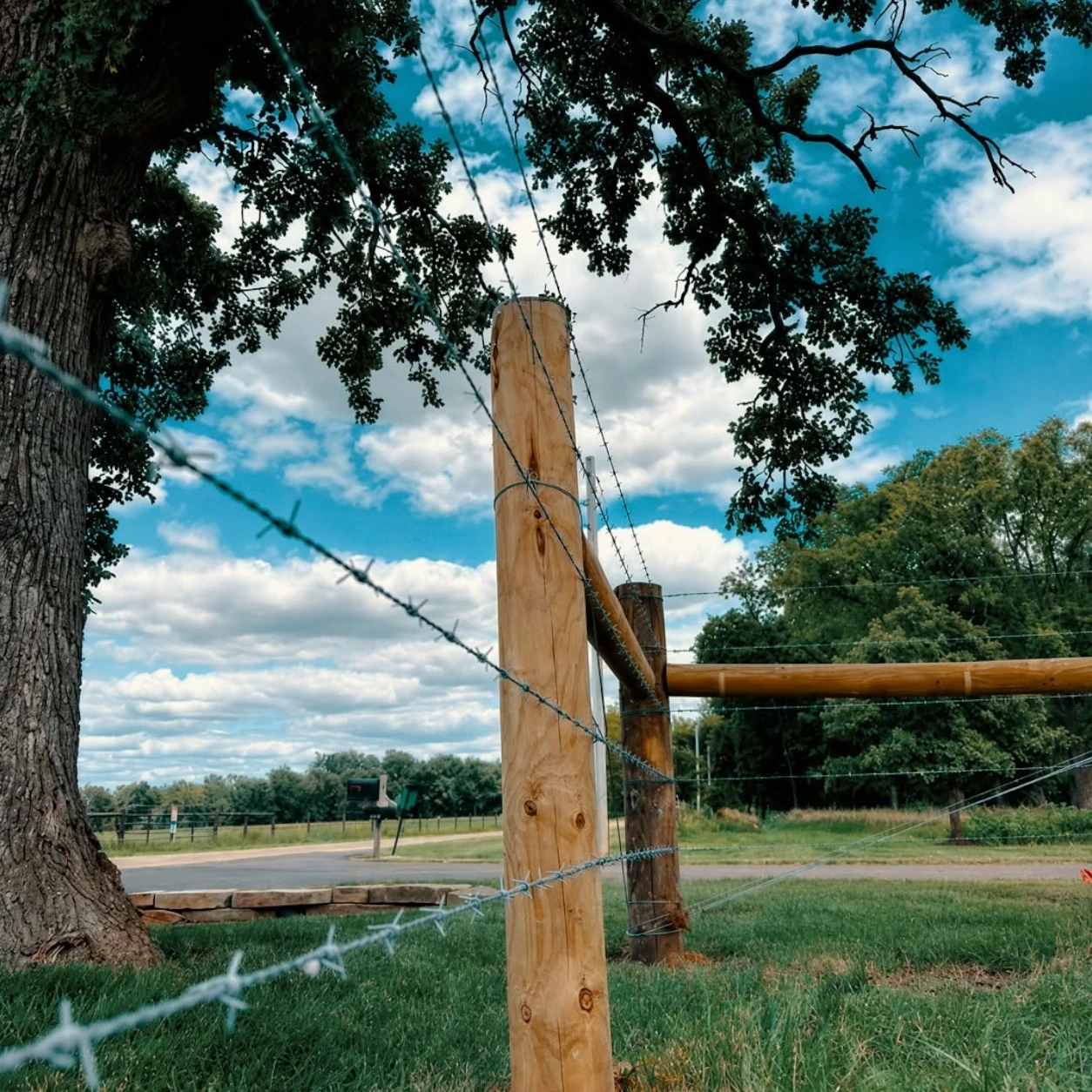
Dependable barbed wire fencing requires strong corners and end assemblies, secure posts, suitable strand spacing, reliable fasteners, and consistent tension throughout the fence line.
Barbed Wire Fencing Options
Choose the Right Barbed Wire Configuration for the Property
For example, Barbed wire can serve as a primary cattle or boundary fence, reinforce another fence type, or work with an electric offset in selected areas. Therefore, the right configuration depends on livestock, fence length, terrain, visibility, adjoining land uses, expected pressure, maintenance, and budget.
Cattle & Pasture Fencing
Barbed wire is commonly used for suitable cattle pastures and grazing boundaries when strand count, spacing, fence height, corners, bracing, gates, and livestock pressure are properly considered.
Long-Run Boundary Fencing
An economical option for long agricultural boundaries, field edges, rural acreage, and perimeter runs when the fence follows the terrain and uses properly positioned braces and corners.
Electric Fence Reinforcement
Properly planned electric fencing may help discourage livestock from leaning, rubbing, or placing pressure on a suitable barbed-wire fence in higher-pressure areas.
Planning the Fence Line
Build Strength Into Corners, Braces, Posts, and Gates
Before installation, thoughtful fence design determines how each run follows the land. It also establishes the locations of corners, braces, gates, crossings, reinforcement, and tensioning points.
As a result, planning these components before installation helps prevent leaning corners, sagging strands, loose fasteners, weak gates, inconsistent spacing, and fence sections that become difficult to inspect or maintain.
✓ Fence purpose, livestock type, animal pressure, strand count, spacing, and overall height
✓ Total fence length, property corners, changes in direction, slopes, low areas, wooded sections, waterways, and crossings
✓ Corner assemblies, end braces, line posts, post spacing, post depth, anchors, and suitable fasteners
✓ Gates for livestock, tractors, trailers, mowers, deliveries, and emergency access
✓ Wire tension, splices, strainers, connections, electric reinforcement, and warning markers where appropriate
✓ Existing fencing, broken strands, leaning posts, damaged braces, repairs, replacement, removal, and future extensions
Our Process
From Fence-Line Review to a Properly Tensioned Installation
01. Review the Fence Line and Use
First, our crew reviews the fence purpose, livestock, total run length, property line, terrain, slopes, corners, wooded areas, low spots, existing fencing, gates, equipment access, and plans.
02. Design the Layout and Bracing
Next, we plan the fence route, strand count, height, post spacing, bracing, gates, fasteners, reinforcement, and tensioning points around the land and expected pressure.
03. Install, Fasten, and Tension
Finally, our crew installs the posts, corners, braces, wire, fasteners, gates, and reinforcement with consistent spacing and controlled tension.
Barbed Wire Fencing FAQs
Questions About Barbed Wire Fencing
Is barbed wire fencing suitable for cattle?
Barbed wire is commonly used for cattle pastures and agricultural boundaries. Therefore, the design should account for fence height, strand count, spacing, tension, bracing, gates, and livestock pressure. It may not be appropriate for every animal species or enclosure.
How many strands of barbed wire should a fence have?
The appropriate strand count depends on the livestock, animal size, stocking pressure, fence purpose, terrain, total height, strand spacing, and whether electric reinforcement is included. Select the configuration after reviewing the property and intended use.
Can barbed wire fencing be reinforced with electric wire?
Yes. In addition, properly planned electric fencing may help discourage cattle from leaning, rubbing, or placing pressure on a suitable barbed-wire fence. Wire placement, energizer capacity, grounding, vegetation control, warning markers, and regular inspection must be considered.
Can an older barbed wire fence be repaired or replaced?
Yes. Existing barbed wire fencing can be evaluated for broken or sagging strands, failed splices, leaning posts, loose fasteners, weak corners, damaged braces, vegetation pressure, and gate problems. It may be retensioned, repaired, reinforced, partially replaced, or completely replaced.
How much does barbed wire fencing cost?
Because every property differs, cost depends on total fence length, strand count, post type and spacing, corners, braces, terrain, soil conditions, gates, site access, electric reinforcement, existing-fence removal, and required repairs. A fence-line review is needed for an accurate estimate.
Do you install barbed wire fencing throughout Rockford, Northern Illinois, and the greater Chicago area?
Farmland Fencing installs and repairs barbed wire fencing for farms, cattle pastures, fields, rural acreage, and agricultural properties throughout the greater Chicago area. Before requesting an estimate, provide the property address, approximate fence length, intended use, livestock type, and gate requirements when requesting an estimate.
Explore Related Services
Related Services for Barbed Wire Fencing
Cattle Fencing
Plan cattle-specific pasture lines, field divisions, lanes, gates, pressure points, repairs, and new installation around herd behavior and daily farm use.
High-Tensile Fencing
Compare a smooth-wire alternative for long runs, large pastures, boundaries, electric combinations, repairs, and new fence installation.
Fencing Repair
Restore damaged strands, loose fasteners, leaning posts, weak corners, failed braces, poor tension, gates, and transitions.
Start Planning Your Barbed Wire Fence
Let’s Build a Dependable Barbed Wire Fence
Tell us about your livestock, property boundaries, total fence length, terrain, gates, existing fencing, pressure points, and project location. We’ll help you plan a properly braced and tensioned barbed-wire fence for dependable agricultural use.
Professional barbed wire fencing for cattle, pastures, fields, rural boundaries, gates, repairs, replacement, and new installation throughout the Chicago, Illinois area.