Farm, Livestock & Rural Property Solutions
Farm Fencing Services for Chicago-Area Properties
Explore professional farm fencing services for agricultural land, livestock, horses, acreage, property boundaries, gates, and specialty applications throughout the Chicago area.
PRINCIPAL FARM FENCING SERVICES
Start With Your Property or Animals
These four principal service areas provide the best starting point. Each service page explains suitable fence types, planning considerations, installation options, and related services for your property.
Agricultural Fencing
Fencing systems for fields, working farms, agricultural boundaries, equipment areas, property use, and long-term operational needs.
Livestock Fencing
Livestock containment planned around animal type, pasture rotation, terrain, gates, visibility, and daily handling requirements.
Horse Fencing
Visible, dependable fencing for horse pastures, paddocks, corrals, gates, and the safe movement of horses around the property.
Acreage Fencing
Practical fencing for large rural properties, boundaries, driveways, animals, privacy needs, and changing land use.
Complete Service Directory
Find the Farm Fence Service You Need
Browse our farm and rural-property fencing services by application, animal, fence type, or installation need. If your project crosses several categories, contact us and describe the property rather than trying to select a service yourself.
Installation, Gates & Fence Repair
CHOOSING A FARM FENCE
What Determines the Right Fencing System?
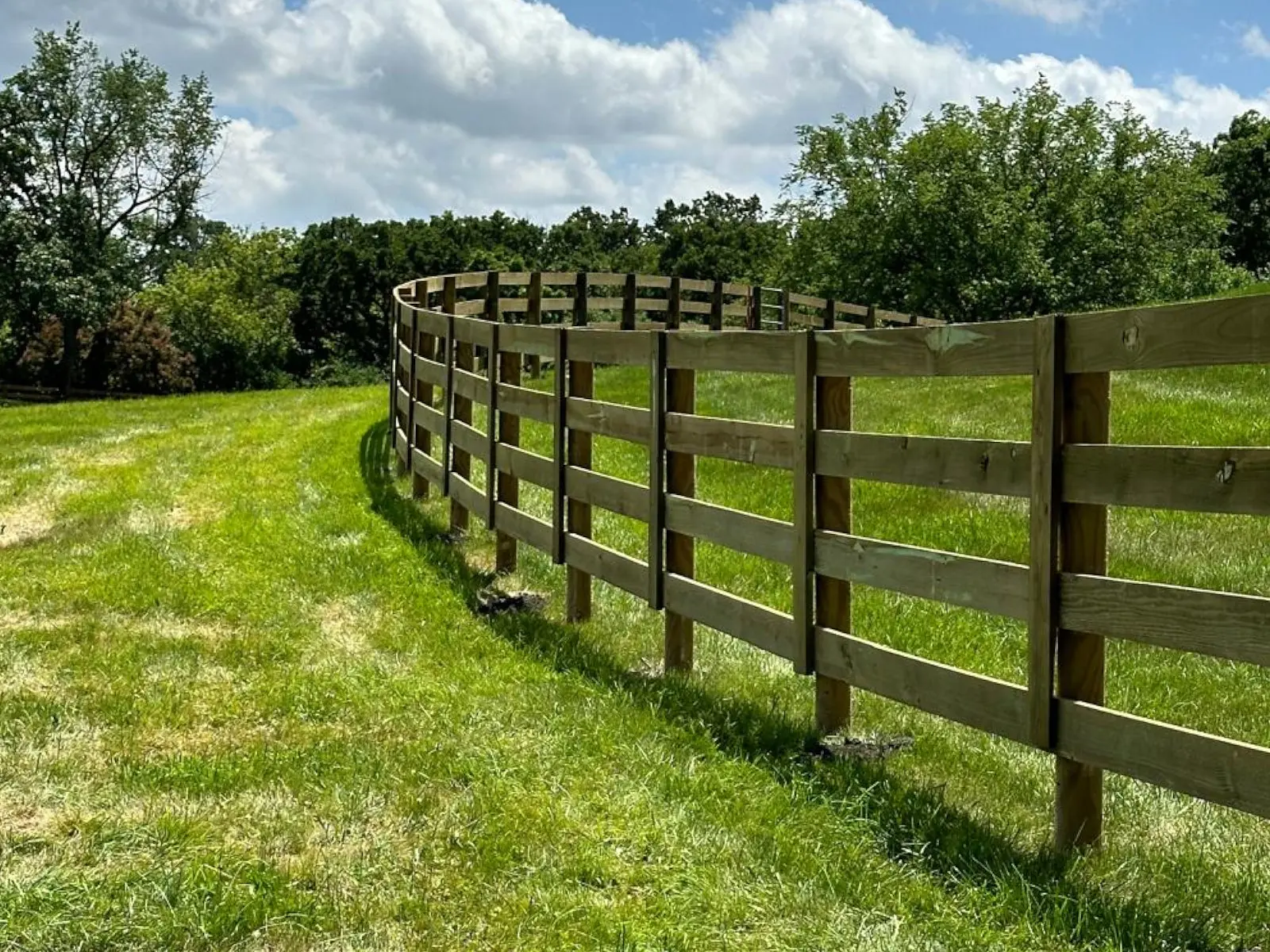
The right fence is determined by more than its appearance or material. A fencing system must suit the property, the animals being contained or excluded, and the way the land is used every day.
Agricultural and rural-property fencing should be planned around the total fence length, terrain, soil and drainage conditions, livestock pressure, visibility, gates, equipment access, maintenance expectations, and future use of the property. Illinois weather and seasonal ground conditions must also be considered when selecting materials and installation methods.
Farmland Fencing evaluates these practical factors before recommending a fence type. This helps property owners compare suitable options without choosing a material that does not fit the land or the purpose of the fence.
The objective is not simply to install a fence—it is to build the right fence for the way you use your land.
Farm Fencing Services Throughout the Chicago Area
Farmland Fencing provides agricultural, livestock, horse, acreage, and rural-property fencing services throughout Chicago and surrounding Illinois communities. Contact us with the property location, approximate fence length, and intended use, and we will confirm service availability.
NOT SURE WHERE TO BEGIN?
Start With the Land and the Purpose of the Fence
You do not need to choose a fence material before contacting us. Tell us where the property is located, how the land is used, what the fence needs to contain or keep out, and approximately how much fencing is required. We can use those details to identify appropriate options for your project.
✓ Property location and approximate fence length
✓ Animals to contain or keep out
✓ Terrain, soil, drainage, and access
✓ Gate and equipment requirements
✓ Preferred materials, if already known
✓ Repair, replacement, or new installation
Frequently Asked Questions
Questions About Our Farm Fencing Services
What types of farm fencing do you install?
Farmland Fencing installs fencing for agricultural land, livestock, horses, pastures, fields, large acreage, and rural property boundaries. Available solutions may include woven wire, high-tensile, electric, board, post-and-rail, and other fencing systems suited to the property’s intended use. We also install gates and can help determine which materials and layout are appropriate for the land, animals, access requirements, and long-term maintenance expectations.
How do I determine which fence is right for my property?
The right fence depends on what it must contain or keep out, the size and layout of the property, terrain, soil conditions, gate locations, equipment access, and your maintenance preferences. A fence suitable for cattle may not be the safest choice for horses, while a boundary fence may have different requirements from a pasture enclosure. We evaluate these practical factors and explain the suitable options before the project begins.
Do you install fences for horses and livestock?
Yes. We install fencing for horses, cattle, and other livestock. Each system is planned according to the animals involved, the size and use of the enclosure, visibility needs, pressure on the fence, pasture layout, and daily access. Horse fencing requires particular attention to visibility and reducing potential injury hazards. Livestock fencing must provide dependable containment while allowing practical placement of gates, feeding areas, lanes, and pasture divisions.
Can you repair or replace an existing farm fence?
Yes. We can evaluate an existing farm fence to determine whether targeted repairs or replacement would be the more practical solution. Repair work may involve damaged sections, leaning or failed posts, loose wire, gates, or other worn components. When deterioration is widespread or the existing fence no longer serves the property’s needs, replacing part or all of the system may provide better long-term value. The recommended approach depends on the fence’s condition and intended use.
Do you install gates with new fencing?
Yes. Gates can be included as part of a new fencing project. Their number, type, width, and placement should be considered during the initial planning process. We look at how people, livestock, vehicles, trailers, and farm equipment will move through the property. Planning gates correctly from the beginning helps prevent inconvenient access, tight turning areas, and unnecessary changes after the fence has already been installed.
Do you fence large acreage properties?
Yes. Farmland Fencing provides fencing solutions for large acreage, farms, pastures, and rural properties. Large projects require careful planning of fence lines, materials, terrain, access points, gates, and the property’s present and future uses. Approximate measurements or a property map can be helpful during the initial discussion, but the proposed fence line and site conditions may also need to be evaluated before the project’s final scope and installation requirements can be determined.
What information is needed to request an estimate?
Begin with the property address, the approximate length or area to be fenced, and the purpose of the fence. Tell us what animals it must contain or what it must keep out, whether the project involves new installation, repair, or replacement, and how many gates may be needed. Photos, surveys, property maps, and preferred materials are also helpful when available. You do not need to know the exact fence type before contacting us.
What areas around Chicago do you serve?
Farmland Fencing serves farms, acreage properties, horse properties, livestock operations, and rural or semi-rural properties throughout the greater Chicago, Illinois area. Availability can depend on the property’s exact location and the size and type of project. Send us the property address or community name with a brief description of the fencing you need, and we can confirm whether the location falls within our current service area.
START PLANNING YOUR FENCE
Let’s Find the Right Fence for Your Property
Tell us about your property location, land, animals, gates, approximate fence length, and the purpose of the fence. We’ll help you identify the appropriate service and discuss the next steps.