The best fencing for horses must do more than mark a boundary. It needs to be visible at speed, strong enough to contain the animals, smooth on the horse side, and free of openings or projections that create unnecessary injury risks. It also has to fit the pasture, paddock, corral, terrain, climate, and maintenance schedule.
Board, horse-safe woven wire, high-tensile wire, and electric fencing can all serve a purpose on equine properties. However, they do not offer the same visibility, physical barrier, flexibility, or maintenance demands. The safest horse fencing design often combines materials—for example, a permanent board or mesh perimeter with an electric offset to discourage leaning and reaching.
Quick Answer
For many horse properties, a well-built board fence or horse-specific small-mesh woven wire fence provides the best balance of visibility and physical containment. A visible electric offset can discourage horses from leaning or reaching over the fence. High-tensile systems require careful horse-specific design because thin wires can be difficult to see. Barbed wire should be avoided around horses because of the risk of serious cuts.
Best Fencing for Horses: Options Compared
This table provides a practical comparison. Final specifications should reflect the horses, property, selected materials, manufacturer requirements, and installation conditions.
| Fence option | Visibility | Main advantages | Important considerations |
|---|---|---|---|
| Board or rail fence | Excellent | Highly visible, familiar appearance, strong physical boundary | Boards can break, splinter, loosen, or be chewed; ongoing inspection is important |
| Horse-safe woven wire | Good when properly installed | Continuous barrier, small mesh options reduce hoof entrapment risk, useful for permanent perimeters | Requires correct mesh, strong braces, tension, smooth edges, and close ground fit |
| High-tensile smooth wire | Low without added visibility | Efficient for long runs, flexible, can be electrified | Needs horse-specific design, excellent tension, visible markers or top material, and reliable maintenance |
| Electric tape, braid, or offset wire | Varies; tape and braid are more visible | Discourages leaning, supports paddock divisions, adaptable to different layouts | Depends on training, energizer, grounding, vegetation control, connections, and routine testing |
| Rigid panels | Excellent | Strong control in corrals, lots, lanes, gates, and pressure areas | Usually too material-intensive for complete pasture perimeters |
What Makes a Horse Fence Safer?
Horses can run into a fence when frightened, lean over it to reach forage, scratch against posts, paw near the bottom, or place a head or leg through an opening. That makes horse fencing different from a boundary designed only for cattle or general property use.
- Visibility: horses should be able to recognize the fence when moving through the pasture.
- A smooth horse side: rails and mesh should be attached so exposed fasteners, sharp edges, and projections do not face the animals.
- Appropriate openings: gaps should not invite a horse to put its head, leg, or hoof through the fence.
- Strength with some forgiveness: the fence must contain the horse without creating an unnecessarily rigid collision hazard.
- Reliable gates and corners: these areas should prevent crowding, trapping, protrusions, and accidental openings.
- Consistent maintenance: loose wire, broken boards, bent mesh, failed insulators, and exposed fasteners should be corrected promptly.
Penn State Extension’s horse fence-planning guidance likewise emphasizes visibility, a smooth horse side, safe fasteners, and fence designs that reduce the chance of a horse becoming caught.
Board Fencing: Maximum Visibility
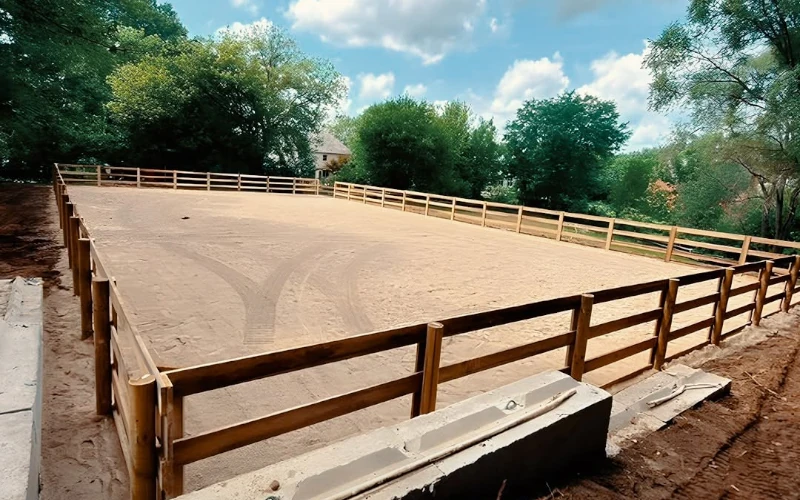
Board fencing is one of the most recognizable horse-fence options. The wide rails are easy for horses to see, and a properly built fence creates a clear physical boundary around pastures, paddocks, and high-visibility areas near barns or entrances.
The tradeoff is maintenance. Wood boards can loosen, warp, crack, splinter, or break after weather exposure and animal pressure. Horses may also chew wood or lean over the top rail. Rails should be installed on the horse side of the posts, fasteners should remain smooth and secure, and damaged boards should be replaced promptly. A properly positioned electric offset can reduce leaning and help protect the rails.
Woven Wire: Choose Horse-Specific Mesh
Woven wire fencing provides a continuous physical barrier and can be a strong option for permanent horse perimeters. The critical detail is the mesh. Horse-specific small or no-climb openings help reduce the chance that a hoof will pass through and become trapped.
Mesh should be correctly tensioned, secured to the horse side of the posts, and kept close enough to the ground that a horse cannot push a leg underneath. Cut wire ends, loose ties, damaged mesh, and projecting hardware should never face the enclosure. A visible top board, rail, tape, or other horse-appropriate top treatment can make mesh easier to recognize while discouraging horses from stretching over it.
High-Tensile Wire: Visibility Is Essential
High-tensile smooth wire can be efficient across long runs, but thin strands are harder for horses to see than boards, mesh, or wide electric tape. A horse-specific system therefore needs deliberate visibility, correct wire spacing, strong end assemblies, dependable tension, and a design that prevents loose wire.
Visible top material, markers, electrification, and appropriate spacing may form part of the design. A generic high-tensile livestock fence should not automatically be assumed suitable for horses. If a wire becomes loose or difficult to see, the entanglement and collision risks increase. Installation and maintenance are therefore especially important.
Electric Fencing: Useful as an Offset or Division
Electric fencing is often used to protect a physical fence from leaning, create interior paddock divisions, or provide a visible top boundary. Tape and braid are generally easier to see than a single thin wire, although wind exposure and material durability must be considered.
An electric system depends on more than the conductor. Horses must learn to respect it, the energizer must match the installation, grounding must be effective, vegetation must be controlled, and the fence should be tested regularly. Electric material should not become loose, sagging, or difficult to see. Where an escape would place a horse near a road or another serious hazard, a permanent physical perimeter provides an additional level of containment.
Why Barbed Wire Is a Poor Horse-Fence Choice
Barbed wire can cause severe cuts if a horse runs into it, reaches through it, or becomes caught. For that reason, equine extension guidance generally recommends avoiding barbed wire in horse pastures and paddocks. Existing shared boundaries should be evaluated carefully, and a safer interior barrier or offset may be needed to keep horses away from the wire.
Plan the Complete Horse Property
- Identify the horses and how the space will be used. Consider size, age, temperament, herd dynamics, turnout, training, and whether unfamiliar horses will use the enclosure.
- Separate perimeter and interior needs. The permanent outside boundary may need a stronger physical barrier than a temporary paddock divider.
- Mark gates, corners, and pressure areas. Plan safe movement between barn, pasture, paddock, lane, arena, and loading areas before placing ordinary line posts.
- Walk the terrain. Dips, slopes, wet ground, wooded edges, roads, and drainage areas can change fence height, strength, and visibility.
- Choose horse-safe materials and details. Review mesh openings, rail spacing, fasteners, latches, wire visibility, post placement, and electric components as one system.
- Plan maintenance access. The entire fence line should be easy to inspect after storms, snow, falling branches, equipment contact, and animal pressure.
Gates, Corners, and Pressure Areas Matter
Gates should accommodate horses and necessary equipment without creating narrow openings, protruding hardware, or low areas that collect mud and water. Latches should be secure, smooth, and difficult for horses to manipulate. Gates and adjacent fencing must also withstand the pressure created when horses gather to enter or leave.
Tight or square corners can allow dominant horses to trap another animal. Layouts should support clear movement and avoid unnecessary dead ends. Corrals, sacrifice areas, feeding locations, and lanes may also need heavier posts, rails, or panels than the open pasture perimeter.
Common Horse-Fencing Mistakes
- Choosing a fence mainly for appearance without evaluating safety and containment
- Using mesh openings that can catch a hoof or leg
- Leaving nails, screws, wire ends, brackets, or damaged rails exposed on the horse side
- Installing thin wire without enough visibility for horses moving at speed
- Using barbed wire inside horse pastures or paddocks
- Allowing boards, mesh, tape, or wire to become loose or sagging
- Forgetting that gates, corners, feeding areas, and lanes experience more pressure
- Comparing only initial price while ignoring painting, repairs, vegetation control, electrical testing, and replacement
University of Minnesota Extension also advises using a permanent, visible horse perimeter, avoiding sharp projections and barbed wire, and comparing both initial and ongoing maintenance costs when selecting materials. See its horse-fencing considerations for additional planning guidance.
Horse Fencing FAQ
Frequently Asked Questions
What is the best fencing for horses?
For many properties, the best fencing for horses is a visible, well-built system that matches the horses, land and management needs. The best choice still depends on the horses, terrain, enclosure type, budget, and maintenance capacity.
How high should a horse fence be?
Approximately five feet is a common planning benchmark for a permanent horse perimeter, but the correct height depends on horse size, behavior, terrain, enclosure purpose, and the selected fence system. Follow manufacturer guidance and applicable local requirements.
Is woven wire safe for horses?
Horse-specific woven wire with small openings can be a strong option when correctly tensioned and installed with smooth edges and fasteners facing away from the animals. Large or damaged mesh may create hoof and leg entrapment risks.
Can horses be kept behind electric fencing?
A properly installed, visible, and maintained electric system can control horses that have been trained to respect it. Electric fencing is commonly used for interior divisions or as an offset protecting a permanent physical fence. High-consequence perimeters may warrant an additional physical barrier.
Is high-tensile wire safe for horses?
It can be used only when the complete system is designed for horses. Thin wire needs added visibility, correct spacing and tension, strong braces, and frequent inspection. Loose, unmarked, or poorly maintained wire should not be used around horses.
Should barbed wire be used for horses?
Barbed wire should generally be avoided in horse enclosures because it can cause serious cuts if a horse collides with or becomes caught in it. Existing barbed-wire boundaries may need a safer interior fence or offset that prevents horse contact.
Choose for Safety Before Appearance
The best fencing for horses balances visibility, containment, smooth construction, suitable openings, durability, and realistic maintenance. A fence can look attractive and still be wrong for the horses or location. Start with safety and function, then choose the material and appearance that fit the property.
Farmland Fencing installs horse, pasture, paddock, corral, board, woven wire, and electric fencing in Rockford, Northern Illinois, and communities throughout the greater Chicago area. If you are planning a new horse enclosure or replacing an unsafe fence line, request an estimate so the horses, terrain, materials, gates, posts, and maintenance needs can be evaluated together.